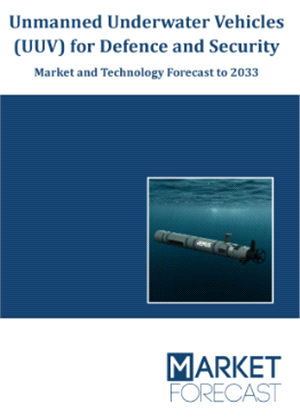
Unmanned Underwater Vehicles (UUV) for Defence and Security - Market and Technology Forecast to 2033
Unmanned Underwater Vehicles (UUV) for Defence and Security - Market and Technology Forecast to 2033
Market forecast by Region, Size, Operation Type, and Lifecycle Phase. Country Analysis, Market and Technology Overview, Critical Raw Materials, Opportunity Analysis, and Leading Company Profiles
Market forecast by Region, Size, Operation Type, and Lifecycle Phase. Country Analysis, Market and Technology Overview, Critical Raw Materials, Opportunity Analysis, and Leading Company Profiles
Unmanned Underwater Vehicles (UUVs) represent a critical inflexion point in the evolution of modern naval forces. While many programmes remain in development, experimentation, or early production, UUVs are steadily emerging as indispensable assets that will reshape how navies conduct mine countermeasures, seabed surveillance, intelligence gathering, and undersea warfare. Their rise aligns with global naval modernisation efforts, where nations are seeking persistent, low-signature, and risk-reducing capabilities that can complement — and in select mission areas partially substitute — traditional manned submarines and surface vessels.
Our newly published study, “Unmanned Underwater Vehicles (UUVs): Market and Technology to 2033,” finds that the UUV domain is transitioning from isolated experimental platforms to integrated components of wider undersea and maritime architectures. Navies are moving away from single-mission autonomous vehicles toward layered, system-of-systems concepts, where UUVs operate in coordination with USVs, surface combatants, submarines, and shore-based command centres. This approach enables persistent ISR, wide-area mine hunting, seabed warfare, and environmental reconnaissance at a scale and endurance that standalone platforms cannot achieve.
This transition is being driven by rapid technological progress. Advances in autonomy software, AI-enabled decision support, sensor fusion, navigation in GPS-denied environments, and energy management are extending UUV endurance, depth, and mission complexity. Improvements in modular payload design and open-architecture mission systems allow UUVs to be reconfigured for diverse roles, including expeditionary and remote mine countermeasures, deep-water ISR, infrastructure monitoring, and payload delivery. As autonomy stacks mature, UUVs are increasingly capable of operating for extended periods with limited human intervention — a prerequisite for their inclusion in emerging doctrines such as distributed maritime operations, seabed warfare, and man–unmanned teaming.
Industry dynamics are evolving in parallel. Alongside established defence primes and naval system integrators, a growing ecosystem of technology-focused firms specialising in autonomy, AI, navigation, energy systems, and advanced sensors is shaping the UUV landscape. Early approaches that adapted commercial or aerial unmanned technologies for underwater use are giving way to purpose-built UUV platforms, engineered specifically for hydrodynamics, endurance, stealth, and naval integration. As a result, procurement strategies are increasingly focused on open architectures, modularity, and lifecycle upgradeability, reflecting the long development timelines and rapid pace of technological change inherent to the undersea domain.
Looking ahead, the coming decade will favour organisations capable of delivering integrated UUV ecosystems rather than standalone vehicles. Success will depend on combining robust autonomy, secure underwater and surface connectivity, adaptable payloads, and seamless interoperability with existing naval forces. As navies seek to extend undersea presence, reduce operational risk, and manage the escalating cost and scarcity of crewed platforms, UUVs are set to become a foundational element of future undersea warfare, maritime security, and seabed operations.
This report, in particular, provides an in-depth analysis of the following.
- Overview: Snapshot of the UUV technology in the military market during 2025-2033, including highlights of the demand drivers, trends, and challenges. It also provides a snapshot of the spending with respect to regions as well as segments, and sheds light on the emergence of new technologies.
- Market Dynamics: Insights into the technological developments in the UUV market and a detailed analysis of the changing preferences of governments around the world. It also analyses changing industry structure trends and the challenges faced by the industry participants.
- Segment Analysis: Insights into the various systems market from a segmental perspective and a detailed analysis of factors influencing the market for each segment.
- Regional Review: Insights into modernisation patterns and budgetary allocation for top countries within a region.
- Regional Analysis: Insights into the systems market from a regional perspective and a detailed analysis of factors influencing the market for each region.
- Opportunity Analysis: Analysis of future opportunities and scope for the UUVs in the global market. This will give you an indication of market demand potential for UUVs in different regions and of various hull lengths that are important for the forecast.
- Key Program Analysis: Details of the top programs in each segment expected to be executed during the forecast period.
- Competitive Landscape Analysis: Analysis of the competitive landscape of this industry. It provides an overview of key companies, together with insights such as key alliances, strategic initiatives, and a SWOT analysis.
Segmentation
Region
- North America
- Europe
- Asia-Pacific
- Middle East & Africa
- Latin America
- Development
- Production
- SUUV - Small UUV (< 25cm)
- MUUV - Medium UUV (26cm - 53cm)
- LUUV - Large UUV (54cm - 210cm)
- XLUUV - Extra Large UUV (>210cm)
Operation type
- ROV - Remotely Operated Vehicle
- AUV - Autonomous Underwater Vehicle
Scope
This market study offers a detailed analysis of the global UUV market for two reference years and over the next eight years. The market volumes are determined, and market dynamics, industry, technological development, and programmes are analysed.
Methodology specific to the topic
For this study, we examined developments across surface and subsurface naval platforms with a specific focus on littoral combat ships (LCS) and mine countermeasure (MCM) modernisation, replacement, and new procurement programmes. We analysed the evolving role of unmanned surface vehicles (USVs) and their increasing integration with surface combatants to support broader mission management and autonomous operations. In parallel, we assessed submarine fleet developments and evaluated how autonomous and unmanned submarines are creating new operational scope and market opportunities within this domain.
The study also evaluated seabed and deep-water asset protection requirements, reflecting growing concerns over the security of undersea infrastructure. Particular attention was given to deep-water intelligence, surveillance, and reconnaissance (ISR) demands, especially in contested regions such as the Indo-Pacific. In addition, we analysed the demand for remotely operated vehicles (ROVs) supporting mine countermeasure missions, recognising their continued importance in mine identification and neutralisation within modern MCM architectures.
Opportunity Analysis
In this chapter, we consider the compound market growth and the market volumes for the segments of the main forecast. In addition, we discuss and analyse a relevant growth scenario (or scenarios) to show opportunities in the market. Where the main market forecast is based on a combination of traceable data and trends from predictable forecast factors, so does the growth scenario show opportunities in the market based on, for example, event assumptions, inventory replacement, or production capacity.
Who will benefit from this study?
This study is intended for a wide range of stakeholders involved in the planning, development, procurement, and deployment of UUVs and related autonomous undersea capabilities.
It will benefit defence procurement authorities evaluating current and future UUV acquisition strategies, including mine countermeasure, ISR, seabed warfare, and deep-water surveillance platforms. Government decision-makers and naval modernisation planners will gain insights into how UUVs are reshaping undersea force structures, reducing risk to crewed platforms, and enabling new mission concepts across littoral and deep-water environments.
The study is particularly relevant for naval capability planners and force-design teams responsible for integrating UUVs into fleet architectures alongside surface combatants, submarines, USVs, and ROVs. Budget and investment analysts will benefit from the long-term procurement and sustainment forecasts, supporting assessments of lifecycle costs and future spending requirements for UUV fleets across different size classes.
Defence research institutions and technology organisations focused on autonomy, naval robotics, and underwater sensing will find value in the analysis of technology maturity, mission evolution, and adoption timelines. Shipyards, submarine builders, and naval engineering firms can use the study to anticipate future demand for UUV launch, recovery, integration, and support infrastructure as unmanned undersea platforms become embedded in naval operations.
The study also supports autonomy software developers and mission-system suppliers working on navigation, AI-enabled decision-making, sensor fusion, and command-and-control for UUV operations. High-technology manufacturers producing sonars, acoustic communications, energy systems, navigation units, and modular payloads will benefit from visibility into platform demand and integration pathways.
For aerospace and defence integrators expanding into the unmanned undersea domain, the study provides a structured view of competitive positioning and entry opportunities. Strategic defence consultancies, investors, and market-intelligence firms will find the analysis useful for feasibility assessments, market sizing, and long-term growth tracking within the defence UUV sector.
Finally, industrial policy bodies, supply-chain agencies, and critical raw-material suppliers will gain insight into future demand for specialised materials, batteries, sensors, and subsea components driven by expanding UUV fleets. Academic institutions and think-tanks focused on naval strategy, unmanned warfare, and distributed maritime operations will benefit from the study’s assessment of how UUVs are transforming undersea conflict, deterrence, and maritime security.
Related studies
- Swarm Technology for Defence Applications - Market and Technology Forecast to 2034
- Electronic Warfare (EW) - Market and Technology Forecast to 2033
- Loitering Munitions - Market and Technology Forecast to 2033
- Military Unmanned Ground Vehicles (UGV) - Market and Technology Forecast to 2033
- Cyber and Electromagnetic Activities (CEMA) - Market and Technology Forecast to 2032
- Military Robots and Autonomous Systems - Market and Technology Forecast to 2030
- Unmanned Surface Vehicles (USV) for Defence and Security - Market and Technology Forecast to 2033
- Military Unmanned Aerial Systems (UAS) - Market and Technology Forecast to 2032
List of figures
Figure 1: Unmanned Underwater Vehicles (UUV) market summary by RegionFigure 2: Unmanned Underwater Vehicles (UUV) market summary by Lifecycle phase
Figure 3: Unmanned Underwater Vehicles (UUV) market summary by Size
Figure 4: Unmanned Underwater Vehicles (UUV) market summary by Operation type
Figure 5: Study Elements
Figure 6: Proprietary System for Data Structuring
Figure 7: Critical Raw Materials producing countries
Figure 8: Critical Raw Materials dependence [%] and volume [mt] by producing countries
Figure 9: Market volumes over the forecast period per region
Figure 10: REMUS UUVs
Figure 11: Iver UUVs
Figure 12: HUGIN UUVs
Figure 13: A18M UUVs
Figure 14: A62 UUVs
Figure 15: SeaCat UUVs
Figure 16: Knieffish UUVs
Figure 17: Lionfish UUVs
Figure 18: ORCA XLUUVs
Figure 19: Bluewhale LUUVs
Figure 20: Seafox LUUVs
Figure 21: ML19/20 UUVs
Figure 22: Defender ROVs
Figure 23: Blueeye Deep Trekker ROVs
Figure 24: Market Segmentation and Sub Segmentation UUV Market
Figure 25: Unmanned Underwater Vehicles (UUV) market to 2033 by Region [US$ millions]
Figure 26: Unmanned Underwater Vehicles (UUV) market to 2033 by Region %
Figure 27: North America Unmanned Underwater Vehicles (UUV) market to 2033 by Lifecycle phase
Figure 28: North America - Unmanned Underwater Vehicles (UUV) market to 2033 by Lifecycle phase
Figure 29: Europe Unmanned Underwater Vehicles (UUV) market to 2033 by Lifecycle phase
Figure 30: Europe - Unmanned Underwater Vehicles (UUV) market to 2033 by Lifecycle phase
Figure 31: Asia Pacific Unmanned Underwater Vehicles (UUV) market to 2033 by Lifecycle phase
Figure 32: Asia Pacific - Unmanned Underwater Vehicles (UUV) market to 2033 by Lifecycle phase
Figure 33: Middle East & Africa Unmanned Underwater Vehicles (UUV) market to 2033 by Lifecycle phase
Figure 34: Middle East & Africa - Unmanned Underwater Vehicles (UUV) market to 2033 by Lifecycle phase
Figure 35: Latin America Unmanned Underwater Vehicles (UUV) market to 2033 by Lifecycle phase
Figure 36: Latin America - Unmanned Underwater Vehicles (UUV) market to 2033 by Lifecycle phase
Figure 37: North America Unmanned Underwater Vehicles (UUV) market to 2033 by Size
Figure 38: North America - Unmanned Underwater Vehicles (UUV) market to 2033 by Size
Figure 39: Europe Unmanned Underwater Vehicles (UUV) market to 2033 by Size
Figure 40: Europe - Unmanned Underwater Vehicles (UUV) market to 2033 by Size
Figure 41: Asia Pacific Unmanned Underwater Vehicles (UUV) market to 2033 by Size
Figure 42: Asia Pacific - Unmanned Underwater Vehicles (UUV) market to 2033 by Size
Figure 43: Middle East & Africa Unmanned Underwater Vehicles (UUV) market to 2033 by Size
Figure 44: Middle East & Africa - Unmanned Underwater Vehicles (UUV) market to 2033 by Size
Figure 45: Latin America Unmanned Underwater Vehicles (UUV) market to 2033 by Size
Figure 46: Latin America - Unmanned Underwater Vehicles (UUV) market to 2033 by Size
Figure 47: North America Unmanned Underwater Vehicles (UUV) market to 2033 by Operation type
Figure 48: North America - Unmanned Underwater Vehicles (UUV) market to 2033 by Operation type
Figure 49: Europe Unmanned Underwater Vehicles (UUV) market to 2033 by Operation type
Figure 50: Europe - Unmanned Underwater Vehicles (UUV) market to 2033 by Operation type
Figure 51: Asia Pacific Unmanned Underwater Vehicles (UUV) market to 2033 by Operation type
Figure 52: Asia Pacific - Unmanned Underwater Vehicles (UUV) market to 2033 by Operation type
Figure 53: Middle East & Africa Unmanned Underwater Vehicles (UUV) market to 2033 by Operation type
Figure 54: Middle East & Africa - Unmanned Underwater Vehicles (UUV) market to 2033 by Operation type
Figure 55: Latin America Unmanned Underwater Vehicles (UUV) market to 2033 by Operation type
Figure 56: Latin America - Unmanned Underwater Vehicles (UUV) market to 2033 by Operation type
Figure 57: Unmanned Underwater Vehicles (UUV) market to 2033 by Operation type [US$ millions]
Figure 58: Unmanned Underwater Vehicles (UUV) market to 2033 by Operation type %
Figure 59: Remotely Operated Vehicle Unmanned Underwater Vehicles (UUV) market to 2033 by Region
Figure 60: Remotely Operated Vehicle - Unmanned Underwater Vehicles (UUV) market to 2033 by Region
Figure 61: Autonomous Underwater Vehicle Unmanned Underwater Vehicles (UUV) market to 2033 by Region
Figure 62: Autonomous Underwater Vehicle - Unmanned Underwater Vehicles (UUV) market to 2033 by Region
Figure 63: Remotely Operated Vehicle Unmanned Underwater Vehicles (UUV) market to 2033 by Lifecycle phase
Figure 64: Remotely Operated Vehicle - Unmanned Underwater Vehicles (UUV) market to 2033 by Lifecycle phase
Figure 65: Autonomous Underwater Vehicle Unmanned Underwater Vehicles (UUV) market to 2033 by Lifecycle phase
Figure 66: Autonomous Underwater Vehicle - Unmanned Underwater Vehicles (UUV) market to 2033 by Lifecycle phase
Figure 67: Remotely Operated Vehicle Unmanned Underwater Vehicles (UUV) market to 2033 by Size
Figure 68: Remotely Operated Vehicle - Unmanned Underwater Vehicles (UUV) market to 2033 by Size
Figure 69: Autonomous Underwater Vehicle Unmanned Underwater Vehicles (UUV) market to 2033 by Size
Figure 70: Autonomous Underwater Vehicle - Unmanned Underwater Vehicles (UUV) market to 2033 by Size
Figure 71: Unmanned Underwater Vehicles (UUV) market to 2033 by Size [US$ millions]
Figure 72: Unmanned Underwater Vehicles (UUV) market to 2033 by Size %
Figure 73: Small UUV (< 25cm) Unmanned Underwater Vehicles (UUV) market to 2033 by Region
Figure 74: Small UUV (< 25cm) - Unmanned Underwater Vehicles (UUV) market to 2033 by Region
Figure 75: Medium UUV (26cm - 53cm) Unmanned Underwater Vehicles (UUV) market to 2033 by Region
Figure 76: Medium UUV (26cm - 53cm) - Unmanned Underwater Vehicles (UUV) market to 2033 by Region
Figure 77: Large UUV (54cm - 210cm) Unmanned Underwater Vehicles (UUV) market to 2033 by Region
Figure 78: Large UUV (54cm - 210cm) - Unmanned Underwater Vehicles (UUV) market to 2033 by Region
Figure 79: Extra Large UUV (>210cm) Unmanned Underwater Vehicles (UUV) market to 2033 by Region
Figure 80: Extra Large UUV (>210cm) - Unmanned Underwater Vehicles (UUV) market to 2033 by Region
Figure 81: Small UUV (< 25cm) Unmanned Underwater Vehicles (UUV) market to 2033 by Lifecycle phase
Figure 82: Small UUV (< 25cm) - Unmanned Underwater Vehicles (UUV) market to 2033 by Lifecycle phase
Figure 83: Medium UUV (26cm - 53cm) Unmanned Underwater Vehicles (UUV) market to 2033 by Lifecycle phase
Figure 84: Medium UUV (26cm - 53cm) - Unmanned Underwater Vehicles (UUV) market to 2033 by Lifecycle phase
Figure 85: Large UUV (54cm - 210cm) Unmanned Underwater Vehicles (UUV) market to 2033 by Lifecycle phase
Figure 86: Large UUV (54cm - 210cm) - Unmanned Underwater Vehicles (UUV) market to 2033 by Lifecycle phase
Figure 87: Extra Large UUV (>210cm) Unmanned Underwater Vehicles (UUV) market to 2033 by Lifecycle phase
Figure 88: Extra Large UUV (>210cm) - Unmanned Underwater Vehicles (UUV) market to 2033 by Lifecycle phase
Figure 89: Small UUV (< 25cm) Unmanned Underwater Vehicles (UUV) market to 2033 by Operation type
Figure 90: Small UUV (< 25cm) - Unmanned Underwater Vehicles (UUV) market to 2033 by Operation type
Figure 91: Medium UUV (26cm - 53cm) Unmanned Underwater Vehicles (UUV) market to 2033 by Operation type
Figure 92: Medium UUV (26cm - 53cm) - Unmanned Underwater Vehicles (UUV) market to 2033 by Operation type
Figure 93: Large UUV (54cm - 210cm) Unmanned Underwater Vehicles (UUV) market to 2033 by Operation type
Figure 94: Large UUV (54cm - 210cm) - Unmanned Underwater Vehicles (UUV) market to 2033 by Operation type
Figure 95: Extra Large UUV (>210cm) Unmanned Underwater Vehicles (UUV) market to 2033 by Operation type
Figure 96: Extra Large UUV (>210cm) - Unmanned Underwater Vehicles (UUV) market to 2033 by Operation type
Figure 97: Unmanned Underwater Vehicles (UUV) market to 2033 by Lifecycle phase [US$ millions]
Figure 98: Unmanned Underwater Vehicles (UUV) market to 2033 by Lifecycle phase %
Figure 99: Development Unmanned Underwater Vehicles (UUV) market to 2033 by Region
Figure 100: Development - Unmanned Underwater Vehicles (UUV) market to 2033 by Region
Figure 101: Production Unmanned Underwater Vehicles (UUV) market to 2033 by Region
Figure 102: Production - Unmanned Underwater Vehicles (UUV) market to 2033 by Region
Figure 103: Development Unmanned Underwater Vehicles (UUV) market to 2033 by Size
Figure 104: Development - Unmanned Underwater Vehicles (UUV) market to 2033 by Size
Figure 105: Production Unmanned Underwater Vehicles (UUV) market to 2033 by Size
Figure 106: Production - Unmanned Underwater Vehicles (UUV) market to 2033 by Size
Figure 107: Development Unmanned Underwater Vehicles (UUV) market to 2033 by Operation type
Figure 108: Development - Unmanned Underwater Vehicles (UUV) market to 2033 by Operation type
Figure 109: Production Unmanned Underwater Vehicles (UUV) market to 2033 by Operation type
Figure 110: Production - Unmanned Underwater Vehicles (UUV) market to 2033 by Operation type
Figure 111: Unmanned Underwater Vehicles (UUV) Size by Region
Figure 112: Unmanned Underwater Vehicles (UUV) CAGR by Region in US$ millions
Figure 113: Unmanned Underwater Vehicles (UUV) Size by Lifecycle phase
Figure 114: Unmanned Underwater Vehicles (UUV) CAGR by Lifecycle phase in US$ millions
Figure 115: Unmanned Underwater Vehicles (UUV) Size by Size
Figure 116: Unmanned Underwater Vehicles (UUV) CAGR by Size in US$ millions
Figure 117: Unmanned Underwater Vehicles (UUV) Size by Operation type
Figure 118: Unmanned Underwater Vehicles (UUV) CAGR by Operation type in US$ millions
Figure 119: Unmanned Underwater Vehicles (UUV) market summary by Region Growth Scenario
Figure 120: Unmanned Underwater Vehicles (UUV) market to 2033 by Region Growth Scenario [US$ millions]
Figure 121: Unmanned Underwater Vehicles (UUV) market summary by Lifecycle phase Growth Scenario
Figure 122: Unmanned Underwater Vehicles (UUV) market to 2033 by Lifecycle phase Growth Scenario [US$ millions]
Figure 123: Unmanned Underwater Vehicles (UUV) market summary by Operation type Growth Scenario
Figure 124: Unmanned Underwater Vehicles (UUV) market to 2033 by Operation type Growth Scenario [US$ millions]
Figure 125: Unmanned Underwater Vehicles (UUV) market summary by Size Growth Scenario
Figure 126: Unmanned Underwater Vehicles (UUV) market to 2033 by Size Growth Scenario [US$ millions]
List of tables
Table 1: Unmanned Underwater Vehicles (UUV) market summary by Region in US$ millionsTable 2: Unmanned Underwater Vehicles (UUV) market summary by Lifecycle phase in US$ millions
Table 3: Unmanned Underwater Vehicles (UUV) market summary by Size in US$ millions
Table 4: Unmanned Underwater Vehicles (UUV) market summary by Operation type in US$ millions
Table 5: Key Technology Developments and TRLs
Table 6: Technology Developments in China and Russia
Table 7: Critical Raw Materials used in Unmanned Underwater Vehicles (UUV)
Table 8: Critical Raw Materials - Annual production from low-risk countries (LRC) versus required production for Unmanned Underwater Vehicles (UUV)
Table 9: Leading UUV Countries
Table 10: Leading Market Players
Table 11: Recent Contract Overview
Table 12: Market activity
Table 13: Unmanned Underwater Vehicles (UUV) Market Cumulative Share by Country
Table 14: Unmanned Underwater Vehicles (UUV) market to 2033 by Region [US$ millions]
Table 15: North America Unmanned Underwater Vehicles (UUV) market to 2033 by Lifecycle phase [US$ millions]
Table 16: Europe Unmanned Underwater Vehicles (UUV) market to 2033 by Lifecycle phase [US$ millions]
Table 17: Asia Pacific Unmanned Underwater Vehicles (UUV) market to 2033 by Lifecycle phase [US$ millions]
Table 18: Middle East & Africa Unmanned Underwater Vehicles (UUV) market to 2033 by Lifecycle phase [US$ millions]
Table 19: Latin America Unmanned Underwater Vehicles (UUV) market to 2033 by Lifecycle phase [US$ millions]
Table 20: North America Unmanned Underwater Vehicles (UUV) market to 2033 by Size [US$ millions]
Table 21: Europe Unmanned Underwater Vehicles (UUV) market to 2033 by Size [US$ millions]
Table 22: Asia Pacific Unmanned Underwater Vehicles (UUV) market to 2033 by Size [US$ millions]
Table 23: Middle East & Africa Unmanned Underwater Vehicles (UUV) market to 2033 by Size [US$ millions]
Table 24: Latin America Unmanned Underwater Vehicles (UUV) market to 2033 by Size [US$ millions]
Table 25: North America Unmanned Underwater Vehicles (UUV) market to 2033 by Operation type [US$ millions]
Table 26: Europe Unmanned Underwater Vehicles (UUV) market to 2033 by Operation type [US$ millions]
Table 27: Asia Pacific Unmanned Underwater Vehicles (UUV) market to 2033 by Operation type [US$ millions]
Table 28: Middle East & Africa Unmanned Underwater Vehicles (UUV) market to 2033 by Operation type [US$ millions]
Table 29: Latin America Unmanned Underwater Vehicles (UUV) market to 2033 by Operation type [US$ millions]
Table 30: Unmanned Underwater Vehicles (UUV) market to 2033 by Operation type [US$ millions]
Table 31: Remotely Operated Vehicle Unmanned Underwater Vehicles (UUV) market to 2033 by Region [US$ millions]
Table 32: Autonomous Underwater Vehicle Unmanned Underwater Vehicles (UUV) market to 2033 by Region [US$ millions]
Table 33: Remotely Operated Vehicle Unmanned Underwater Vehicles (UUV) market to 2033 by Lifecycle phase [US$ millions]
Table 34: Autonomous Underwater Vehicle Unmanned Underwater Vehicles (UUV) market to 2033 by Lifecycle phase [US$ millions]
Table 35: Remotely Operated Vehicle Unmanned Underwater Vehicles (UUV) market to 2033 by Size [US$ millions]
Table 36: Autonomous Underwater Vehicle Unmanned Underwater Vehicles (UUV) market to 2033 by Size [US$ millions]
Table 37: Unmanned Underwater Vehicles (UUV) market to 2033 by Size [US$ millions]
Table 38: Small UUV (< 25cm) Unmanned Underwater Vehicles (UUV) market to 2033 by Region [US$ millions]
Table 39: Medium UUV (26cm - 53cm) Unmanned Underwater Vehicles (UUV) market to 2033 by Region [US$ millions]
Table 40: Large UUV (54cm - 210cm) Unmanned Underwater Vehicles (UUV) market to 2033 by Region [US$ millions]
Table 41: Extra Large UUV (>210cm) Unmanned Underwater Vehicles (UUV) market to 2033 by Region [US$ millions]
Table 42: Small UUV (< 25cm) Unmanned Underwater Vehicles (UUV) market to 2033 by Lifecycle phase [US$ millions]
Table 43: Medium UUV (26cm - 53cm) Unmanned Underwater Vehicles (UUV) market to 2033 by Lifecycle phase [US$ millions]
Table 44: Large UUV (54cm - 210cm) Unmanned Underwater Vehicles (UUV) market to 2033 by Lifecycle phase [US$ millions]
Table 45: Extra Large UUV (>210cm) Unmanned Underwater Vehicles (UUV) market to 2033 by Lifecycle phase [US$ millions]
Table 46: Small UUV (< 25cm) Unmanned Underwater Vehicles (UUV) market to 2033 by Operation type [US$ millions]
Table 47: Medium UUV (26cm - 53cm) Unmanned Underwater Vehicles (UUV) market to 2033 by Operation type [US$ millions]
Table 48: Large UUV (54cm - 210cm) Unmanned Underwater Vehicles (UUV) market to 2033 by Operation type [US$ millions]
Table 49: Extra Large UUV (>210cm) Unmanned Underwater Vehicles (UUV) market to 2033 by Operation type [US$ millions]
Table 50: Unmanned Underwater Vehicles (UUV) market to 2033 by Lifecycle phase [US$ millions]
Table 51: Development Unmanned Underwater Vehicles (UUV) market to 2033 by Region [US$ millions]
Table 52: Production Unmanned Underwater Vehicles (UUV) market to 2033 by Region [US$ millions]
Table 53: Development Unmanned Underwater Vehicles (UUV) market to 2033 by Size [US$ millions]
Table 54: Production Unmanned Underwater Vehicles (UUV) market to 2033 by Size [US$ millions]
Table 55: Development Unmanned Underwater Vehicles (UUV) market to 2033 by Operation type [US$ millions]
Table 56: Production Unmanned Underwater Vehicles (UUV) market to 2033 by Operation type [US$ millions]
Table 57: Unmanned Underwater Vehicles (UUV) market to 2033 by Region Growth Scenario [US$ millions]
Table 58: Unmanned Underwater Vehicles (UUV) market to 2033 by Lifecycle phase Growth Scenario [US$ millions]
Table 59: Unmanned Underwater Vehicles (UUV) market to 2033 by Operation type Growth Scenario [US$ millions]
Table 60: Unmanned Underwater Vehicles (UUV) market to 2033 by Size Growth Scenario [US$ millions]
Anduril Industries
Aselsan A.S.
Atlas Elektronik
BAE Systems Plc
BlueHalo
C2 Robotics
EUROATLAS GmbH
Exail
Fincantieri
General Atomics
General Dynamics Mission Systems
Hanwha Systems
Havelsan
Helsing
Huntington Ingalls Industries (HII)
Israel Aerospace Industries (IAI)
Kongsberg
Kraken Robotics Inc.
L3Harris Technologies
Leidos
M Subs Ltd
Mitsubishi Heavy Industries, Ltd.
Naval Group
Navantia
Northrop Grumman Corporation
SAIC
Saab AB
Thales
The Boeing Company
ThyssenKrupp Marine Systems
iXBlue
Single User License: This license allows for use of a report by one person. This person may use the report on any computer, and may print out the report, but may not share the report (or any information contained therein) with any other person or persons. Unless a Departmental License, a Site License or a Global Site License is purchased, a Single User License must be purchased for every person that wishes to use the report within the same enterprise. Customers who infringe these license terms are liable for a Global Site license fee.
5-User License: This license allows for use of a report by five people within the same enterprise. Each of these people may use the report on any computer, and may print out the report, but may not share the report (or any information contained therein) with any other person or persons. Customers who infringe these license terms are liable for a Global Site license fee.
Site License: This license allows for use of a report by an unlimited number of people within the same enterprise location. Each of these people may use the report on any computer, and may print out the report, but may not share the report (or any information contained therein) with any person or persons outside of the enterprise location. Customers who infringe these license terms are liable for a Global Site license fee.
Enterprise License: This license allows for use of a report by an unlimited number of people within the same enterprise worldwide. Each of these people may use the report on any computer, and may print out the report, but may not share the report (or any information contained therein) with any other person or persons outside of the enterprise.
| Study Code: | MF252546 |
| Publication date: | December 22, 2025 |
| Pages: | 270 |