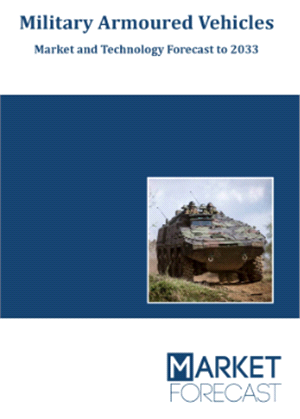
Military Armoured Vehicles - Market and Technology Forecast to 2033
Military Armoured Vehicles - Market and Technology Forecast to 2033
Market forecasts by Regions, and by Type. Country Analysis, Opportunity and Impact Analysis, Market and Technologies Overview, and Leading Companies
Market forecasts by Regions, and by Type. Country Analysis, Opportunity and Impact Analysis, Market and Technologies Overview, and Leading Companies
In an era defined by escalating geopolitical tensions, rising defence budgets, and the return of high-intensity conflicts, the global armoured vehicles market is entering a phase of robust, long-term growth. Armed forces worldwide are prioritising mechanised and motorised capabilities, driving accelerated procurement of infantry fighting vehicles (IFVs), armoured personnel carriers (APCs), and advanced support platforms. Lessons from recent conflicts in Ukraine and Gaza have reaffirmed the vital role of armoured systems in modern warfare, intensifying demand for platforms that deliver superior survivability and lethality.
Europe is leading this resurgence, reversing years of underinvestment through ambitious modernisation programmes that are transforming continental defence postures, while the United States maintains a mature market dominated by established leaders.Market dynamics are evolving rapidly. Consolidation efforts in Europe continue to navigate national interests and regional priorities, while nations like Poland pursue greater industrial independence. In the Middle East, countries including the UAE and Saudi Arabia are developing domestic capabilities to enhance operational sustainability and reduce reliance on external suppliers. Meanwhile, China is emerging as a disruptive force, offering cost-effective yet advanced designs that are challenging traditional exporters, particularly as Russia's capabilities remain constrained by ongoing demands.
Technological innovation is reshaping the sector, with AI, big data, augmented and virtual reality, and additive manufacturing enabling faster design, prototyping, and lifecycle management. Rising threats from anti-tank missiles, drones, loitering munitions, and peer-level armour are accelerating the integration of active protection systems (APS) on main battle tanks and IFVs, overcoming previous cost barriers to deliver enhanced battlefield resilience.
Competition remains fierce, shaped by long platform lifecycles, politically sensitive procurements, and requirements for local industrial participation. Leading OEMs are securing advantage through strategic acquisitions, resilient supply chains, and comprehensive lifecycle support solutions.
Beyond initial acquisitions, the market offers substantial opportunities in upgrades, maintenance, and sustained services. In a complex global security environment marked by persistent threats and the re-emergence of peer-level warfare, the demand for powerful, deterrent armoured forces will continue to drive expansion—creating lasting value for stakeholders positioned to meet these evolving needs.
Our in-depth Market Analysis Report provides the strategic insights, trends, forecasts, and competitive intelligence required to capitalise on this dynamic sector. Contact us today to secure your copy and stay ahead in this critical market.Segmentation
The report segments the market in two major segments, by region and by vehicle type.
Region
- North America
- Europe
- Latin America
- Asia-Pacific
- Middle East & Africa
- Armoured Personnel Carrier
- Armoured Engineering Vehicle
- Armoured Support Vehicle
- Infantry Fighting Vehicle
- Light Multirole Vehicle
This report, in particular, provides an in-depth analysis of the following.
- Overview: A strong insight of the Armoured Vehicles market in the military market during 2025-2033, including highlights of the demand drivers, trends, and challenges. It also provides a snapshot of the spending with respect to regions as well as segments and sheds light on the emergence of new technologies.
- Market Dynamics: Snapshots into the technological developments in armoured vehicles market. It also analyses the market landscape in key regions, how that is shaped by the war in Ukraine and the political and regulatory efforts undertaken to address a series of issues.
- Segment Analysis: Insights into the various armoured vehicles’ variant, and regions from a segmental perspective and a detailed analysis of factors influencing the market for each segment.
- Regional Analysis: Insights into the systems market from a regional perspective and a detailed analysis of factors influencing the market for each region.
- Competitive landscape Analysis: Analysis of the competitive landscape of this industry. It provides an overview of key companies, together with insights such as key alliances, strategic initiatives, and a SWOT analysis.
Reasons to buy
- Explore global initiatives to rapidly expand production armoured vehicles in response to the ongoing conflict in Ukraine and the critical need to rebuild national stockpiles.
- Gain a comprehensive analysis of the key drivers transforming the market landscape, from high-level political directives and defence policies to new industry partnerships, joint ventures, and the reconfiguration of supply chains—including the strategic management of essential raw materials.
- Obtain clear, high-level visibility into ammunition manufacturing capabilities across major regions, including details on production output and the armoured vehicles’ variants being supplied as military aid to Ukraine, and how these developments are influencing global procurement strategies.
- Identify emerging opportunities alongside potential risks in this dynamic sector, empowering decision-makers with the strategic intelligence needed to optimise business development and positioning.
Related studies:
1.1 Trends and Insights
1.2 Main Findings
1.2.1 Armoured Vehicles market summary by Region
1.2.2 Armoured Vehicles market summary by Vehicle Type
1.3 Key Conclusions
2 Introduction
2.1 Scope
2.2 Definitions
2.3 Methodology
2.4 Who will benefit from this study?
3 Technologies and Developments
3.1 Introduction
3.2 Standardization – Characteristics
3.3 Design of armoured vehicles
3.3.1 Situational Awareness
3.3.2 Tactics
3.3.3 Signature Management
3.3.4 Countermeasures
3.3.5 Active Protection
3.3.6 Armour
3.3.7 Mitigate
3.4 Armoured Vehicles and Artificial Intelligence
3.5 Modularity
4 Critical Raw Materials
5 Market Overview
5.1 Introduction
5.2 Military armoured vehicles market volume distribution over forecast period by Region
5.3 Competitive landscape
5.3.1 North America
5.3.2 Europe
5.3.3 Central & South America
5.3.4 Middle East and North Africa
5.3.5 Asia-Pacific
6 Market Dynamics and Forecast Factors
6.1 Market Segmentation
6.2 Drivers
6.3 Trends
6.4 Opportunities
6.5 Challenges
7 Country Analysis
7.1 North America
7.1.1 Canada
7.1.2 United States
7.2 Europe
7.2.1 Austria
7.2.2 Belgium
7.2.3 Denmark
7.2.4 Finland
7.2.5 France
7.2.6 Germany
7.2.7 Greece
7.2.8 Italy
7.2.9 Lithuania
7.2.10 Luxembourg
7.2.11 Netherlands
7.2.12 Norway
7.2.13 Poland
7.2.14 Romania
7.2.15 Slovenia
7.2.16 Spain
7.2.17 Sweden
7.2.18 United Kingdom
7.3 Latin America
7.3.1 Brazil
7.4 Asia-Pacific
7.4.1 Australia
7.4.2 South Korea
8 Armoured Vehicles market to 2033 by Region
8.1 Armoured Vehicles market by Region overview
8.2 Armoured Vehicles market Region by Vehicle Type overview
8.2.1 North America market by Vehicle Type overview
8.2.2 Europe market by Vehicle Type overview
8.2.3 Latin America market by Vehicle Type overview
8.2.4 Asia-Pacific market by Vehicle Type overview
8.2.5 Middle East & Africa market by Vehicle Type overview
9 Armoured Vehicles market to 2033 by Vehicle Type
9.1 Armoured Vehicles market by Vehicle Type overview
9.2 Armoured Vehicles market Vehicle Type by Region overview
9.2.1 Armoured Personnel Carrier market by Region overview
9.2.2 Armoured Engineering Vehicle market by Region overview
9.2.3 Armoured Support Vehicle market by Region overview
9.2.4 Infantry Fighting Vehicle market by Region overview
9.2.5 Light Multirole Vehicle market by Region overview
10 Opportunity Analysis
10.1 Introduction
10.2 Compound Growth Rates
10.2.1 Region
10.2.2 Vehicle Type
11 Companies
11.1 American Rheinmetall
11.1.1 Introduction
11.1.2 Products & Services
11.1.3 Recent developments
11.2 Arquus (John Cockerill Group)
11.2.1 Introduction
11.2.2 Products & Services
11.2.3 Recent developments
11.2.4 SWOT Analysis
11.3 BAE Systems Plc
11.3.1 Introduction
11.3.2 Products and services
11.3.3 Recent developments
11.3.4 Armoured Vehicles - Recent Contracts
11.3.5 SWOT Analysis
11.4 General Dynamics Land Systems
11.4.1 Introduction
11.4.2 Products & Services
11.4.3 Recent developments
11.4.4 Armoured Vehicles - Recent Contracts
11.4.5 SWOT Analysis
11.5 Iveco Defence Vehicles (IDV)
11.5.1 Introduction
11.5.2 Products & Services
11.5.3 Recent developments
11.5.4 Armoured Vehicles - Recent Contracts
11.5.5 SWOT Analysis
11.6 KNDS
11.6.1 Introduction
11.6.2 Products & Services
11.6.3 Recent developments
11.6.4 Armoured Vehicles - Recent Contracts
11.6.5 SWOT Analysis
11.7 Kongsberg
11.7.1 Introduction
11.7.2 Armoured vehicles - Products and Services
11.7.3 Armoured vehicles - Recent Developments
11.8 Moog Inc.
11.8.1 Introduction
11.8.2 Products and services
11.8.3 Recent developments
11.9 Nimr Automotive (EDGE Group)
11.9.1 Introduction
11.9.2 Armoured vehicles - Products and Services
11.9.3 Armoured vehicles - Recent Developments
11.9.4 SWOT Analysis
11.10 Oshkosh Defense (Oshkosh Corporation)
11.10.1 Introduction
11.10.2 Products & Services
11.10.3 Armoured Vehicles - Recent Contracts
11.10.4 SWOT Analysis
11.11 Otokar - Otokar Otomotiv ve Savunma Sanayi A.S
11.11.1 Introduction
11.11.2 Products and services
11.11.3 Recent developments
11.11.4 SWOT Analysis
11.12 Patria
11.12.1 Introduction
11.12.2 Products & Services
11.12.3 Recent developments
11.12.4 Armoured Vehicles - Recent Contracts
11.12.5 SWOT Analysis
11.13 Rheinmetall AG
11.13.1 Introduction
11.13.2 Products & Services
11.13.3 Recent developments
11.13.4 Armoured Vehicles - Recent Contracts
11.13.5 SWOT Analysis
11.14 Supacat
11.14.1 Introduction
11.14.2 Products and Services
11.14.3 Recent developments and contracts
12 Results and Conclusions
13 About Market Forecast
13.1 General
13.2 Contact us
13.3 Disclaimer
13.4 License
Appendix A: Companies Mentioned
Appendix B: Abbreviations
List of Figures
Figure 1: Armoured Vehicles market summary by Region
Figure 2: Armoured Vehicles market summary by Vehicle Type
Figure 3: Critical Raw Materials producing countries
Figure 4: Critical Raw Materials dependence [%] and volume [mt] by producing countries
Figure 5: Market volumes over the forecast period per region
Figure 6: Market Segmentation and Sub Segmentation Military Avionics Market
Figure 7: The two contestants for the US Army’s XM30 programme that will replace the Bradleys
Figure 8: Armoured Vehicles market to 2033 by Region [US$ millions]
Figure 9: Armoured Vehicles market to 2033 by Region %
Figure 10: North America Armoured Vehicles market to 2033 by Vehicle Type
Figure 11: North America - Armoured Vehicles market to 2033 by Vehicle Type
Figure 12: Europe Armoured Vehicles market to 2033 by Vehicle Type
Figure 13: Europe - Armoured Vehicles market to 2033 by Vehicle Type
Figure 14: Latin America Armoured Vehicles market to 2033 by Vehicle Type
Figure 15: Latin America - Armoured Vehicles market to 2033 by Vehicle Type
Figure 16: Asia-Pacific Armoured Vehicles market to 2033 by Vehicle Type
Figure 17: Asia-Pacific - Armoured Vehicles market to 2033 by Vehicle Type
Figure 18: Middle East & Africa Armoured Vehicles market to 2033 by Vehicle Type
Figure 19: Middle East & Africa - Armoured Vehicles market to 2033 by Vehicle Type
Figure 20: Armoured Vehicles market to 2033 by Vehicle Type [US$ millions]
Figure 21: Armoured Vehicles market to 2033 by Vehicle Type %
Figure 22: Armoured Personnel Carrier Armoured Vehicles market to 2033 by Region
Figure 23: Armoured Personnel Carrier - Armoured Vehicles market to 2033 by Region
Figure 24: Armoured Engineering Vehicle Armoured Vehicles market to 2033 by Region
Figure 25: Armoured Engineering Vehicle - Armoured Vehicles market to 2033 by Region
Figure 26: Armoured Support Vehicle Armoured Vehicles market to 2033 by Region
Figure 27: Armoured Support Vehicle - Armoured Vehicles market to 2033 by Region
Figure 28: Infantry Fighting Vehicle Armoured Vehicles market to 2033 by Region
Figure 29: Infantry Fighting Vehicle - Armoured Vehicles market to 2033 by Region
Figure 30: Light Multirole Vehicle Armoured Vehicles market to 2033 by Region
Figure 31: Light Multirole Vehicle - Armoured Vehicles market to 2033 by Region
Figure 32: Armoured Vehicles Size by Region
Figure 33: Armoured Vehicles CAGR by Region in US$ millions
Figure 34: Armoured Vehicles Size by Vehicle Type
Figure 35: Armoured Vehicles CAGR by Vehicle Type in US$ millions
List of Tables
Table 1: Armoured Vehicles market summary by Region in US$ millionsTable 2: Armoured Vehicles market summary by Vehicle Type in US$ millions
Table 3: Critical Raw Materials used in Armoured Vehicles
Table 4: Critical Raw Materials - Annual production from low-risk countries (LRC) versus required production for Armoured Vehicles
Table 5: Market activity
Table 6: Armoured Vehicles Market Cumulative Share by Country
Table 7: Armoured Vehicles market to 2033 by Region [US$ millions]
Table 8: North America Armoured Vehicles market to 2033 by Vehicle Type [US$ millions]
Table 9: Europe Armoured Vehicles market to 2033 by Vehicle Type [US$ millions]
Table 10: Latin America Armoured Vehicles market to 2033 by Vehicle Type [US$ millions]
Table 11: Asia-Pacific Armoured Vehicles market to 2033 by Vehicle Type [US$ millions]
Table 12: Middle East & Africa Armoured Vehicles market to 2033 by Vehicle Type [US$ millions]
Table 13: Armoured Vehicles market to 2033 by Vehicle Type [US$ millions]
Table 14: Armoured Personnel Carrier Armoured Vehicles market to 2033 by Region [US$ millions]
Table 15: Armoured Engineering Vehicle Armoured Vehicles market to 2033 by Region [US$ millions]
Table 16: Armoured Support Vehicle Armoured Vehicles market to 2033 by Region [US$ millions]
Table 17: Infantry Fighting Vehicle Armoured Vehicles market to 2033 by Region [US$ millions]
Table 18: Light Multirole Vehicle Armoured Vehicles market to 2033 by Region [US$ millions]
ARTEC GmbH
Allison Transmission Holdings Inc
American Rheinmetall
Anduril Industries
Arquus (John Cockerill Group)
BAE Systems Plc
Babcock International
Daimler Truck Holding AG - Mercedes-Benz Trucks
FNSS
GM (General Motors) Defense LLC
General Dynamics Corporation
General Dynamics Land Systems
Hanwha Aerospace
Hanwha Defense Australia
Hanwha Systems
Hyundai Rotem
Israel Aerospace Industries (IAI)
Iveco Defence Vehicles (IDV)
KNDS
KNDS Deutschland
KNDS France S.A.
Kongsberg
Leonardo DRS
Leonardo S.p.A.
Lockheed Martin Corporation
Moog Inc.
Nimr Automotive (EDGE Group)
Northrop Grumman Corporation
Oshkosh Defense (Oshkosh Corporation)
Otokar - Otokar Otomotiv ve Savunma Sanayi A.S
PGZ Group
PGZ Group - HSW (Huta Stalowa Wola S.A.)
PGZ Group - Rosomak
Patria
Rafael Advanced Defense Systems Ltd.
Renk Group
Rheinmetall AG
Rheinmetall Landsysteme GmbH
Supacat
Tatra
Texelis
Thales
Volvo Group – Volvo
Single User License: This license allows for use of a report by one person. This person may use the report on any computer, and may print out the report, but may not share the report (or any information contained therein) with any other person or persons. Unless a Departmental License, a Site License or a Global Site License is purchased, a Single User License must be purchased for every person that wishes to use the report within the same enterprise. Customers who infringe these license terms are liable for a Global Site license fee.
5-User License: This license allows for use of a report by five people within the same enterprise. Each of these people may use the report on any computer, and may print out the report, but may not share the report (or any information contained therein) with any other person or persons. Customers who infringe these license terms are liable for a Global Site license fee.
Site License: This license allows for use of a report by an unlimited number of people within the same enterprise location. Each of these people may use the report on any computer, and may print out the report, but may not share the report (or any information contained therein) with any person or persons outside of the enterprise location. Customers who infringe these license terms are liable for a Global Site license fee.
Global Site License: This license allows for use of a report by an unlimited number of people within the same enterprise worldwide. Each of these people may use the report on any computer, and may print out the report, but may not share the report (or any information contained therein) with any other person or persons outside of the enterprise.
| Study Code: | MF252585 |
| Publication date: | December 29, 2025 |
| Pages: | 151 |