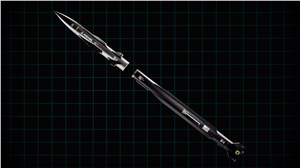
Anduril Unveils the Steelfin Family of Surface-to-Air Interceptor Missiles
October 12, 2026
-Modern air and missile defense is more dynamic and uncertain than ever. Adversaries have invested in large volumes of low-cost, mass-producible offensive weapons, exponentially increasing the volume of fires that American and allied forces face on the battlefield today. In parallel, the types of threats themselves have become increasingly diverse: everything from low-cost drones to theater ballistic missiles and maneuvering hypersonic weapons now can hold American and allied service members at risk.
Today’s interceptor arsenal was not built for this environment. Traditional interceptors are designed around fixed architectures optimized for a narrow set of threats. While these weapons meet top standards for performance at the highest echelons, adapting them to new requirements means years of redesign, the configuration of new production lines, and many additional costs. Altering the interceptor arsenal traditionally has meant amplifying America’s capability gaps while warfighters wait for new weapons to arrive.
This has real downrange effects. Too often, air defense batteries are forced to expend exquisite interceptors against lower-cost threats, straining stores of the most critical defensive weapons in our arsenal and putting American and allied warfighters on the losing side of the cost-exchange. In one engagement, this might be an acceptable trade for the defender. But over a sustained period, it is punishing.
No single interceptor can defeat every threat. Nor can the United States afford to develop an entirely new missile every time the threat changes. Instead, the joint force needs a broader range of defensive effects, an industrial base capable of producing them in volume, and an architecture that can evolve without starting over.
Anduril built Steelfin to address exactly these challenges.
Steelfin is a family of highly-configurable, mass-producible surface-to-air interceptor missiles that has been engineered to deliver cost, volume, and capability overmatch across the modern threat spectrum, including cruise, ballistic, and hypersonic missile threats. Built around a common two-stage architecture, Steelfin allows Anduril to configure interceptor performance for different missions while repurposing many of the same components, production processes, and architecture across the family of interceptors.
Reconfigure, Don’t Redesign
Steelfin was designed from first principles to evolve with changing requirements, without requiring an all-up, years-long redesign of the core underlying platform. Steelfin is a two stage design, encompassing a first-stage booster and second-stage terminal interceptor, offering the flexibility required to align interceptor performance to each threat.
The first stage can accommodate different solid rocket motor boosters to meet specific range, performance, booster types, launch configurations, or packing density requirements. The second stage uses a common terminal interceptor architecture, sharing the same baseline airframe, avionics, software, flight control system, and interfaces across all Steelfin variants. Open, modular interfaces between each of the subsystems in the terminal stage allow Anduril to integrate different seekers, mission systems, and other components without redesigning the entire missile.
Steelfin delivers a diversity of effects to meet a diversity of threats. Unlike legacy missiles that carry fixed, inflexible designs that are resistant to change, Steelfin offers a common interceptor architecture that produces a family of interceptor missiles, each of which can be configured for a specific mission.
That approach provides warfighters with the options required to appropriately match interceptor capability and cost with the specific threat. Steelfin is designed to be configured for threats across the air-and-missile defense spectrum - from point defense, through lower-tier integrated air and missile defense, to upper-tier ballistic missile defense - while targeting a fraction of the cost of today’s benchmark interceptors in each mission class.
Producible by Design
Interceptor performance matters. So does the ability to build enough interceptors to sustain a fight. Legacy interceptors pair exquisite designs with equally exquisite, highly-customized production systems, with different missiles requiring different tooling, processes, suppliers, and facilities. This fragments manufacturing volume across multiple programs and makes it harder to increase output when demand rises.
With Steelfin, Anduril has taken a different approach. Because Steelfin variants share a common architecture and components, they can move through the same production line, using the same tooling, technicians, and facilities. By architecting Steelfin around a common baseline and production process, Anduril can easily surge production for any one Steelfin variant to meet emerging needs. Anduril is currently planning to produce on the order of several thousand Steelfin variants per year in the short term, with capacity that is designed to flex to demand.
Additionally, the standard open architecture interfaces between each subsystem in the terminal stage enable Anduril to integrate commercial-off-the-shelf components and compete open architecture designs among multiple vendors, expanding the supplier base and reducing the risk of supply chain disruptions that could inhibit large-scale production.
Ready to Field
Surface-to-air interceptors are a well-established capability within our armed forces, carrying a wide variety of physical launch infrastructure and fire control systems that are already fielded today. In order for Steelfin to be truly additive to our current forces, it is imperative that Anduril builds the system with existing launch infrastructure in mind.
Steelfin variants are compatible with established land- and sea-based launch infrastructure, including the M903A2, Mk 41 Vertical Launch System, Typhon, and other emerging containerized launch systems. Similarly, Steelfin is designed to integrate with any fielded fire control software system (AEGIS, IBCS, etc.), ensuring that it fits seamlessly into established battle management processes and procedures.
By making Steelfin compatible with fielded air defense hardware and software infrastructure, Anduril has streamlined the path to fielding, accelerated deployment, and ensured that Steelfin will multiply the combat power of the joint force on an operationally-relevant timeline.
A New Approach to Interceptors
Anduril has been building and refining Steelfin for years, investing alongside multiple customers to deliver a capability that is urgently needed today. Anduril has already completed ballistic testing with representative air vehicles, and will begin flight testing Steelfin variants next year.
The modern threat landscape is defined by large volumes of increasingly diverse threats. The defensive arsenal must be, too. Steelfin combines a highly-configurable design, mass-producible baseline architecture, and compatibility with fielded air defense infrastructure to deliver a family of defensive effects that enables American and allied warfighters to tailor interceptor capability and cost directly to the threats they face.
Source : Anduril Industries